Trends and Insights
Psychology of Color and Flavor
The Psychology of Color and Flavor: How Sensory Pairings Drive Consumer Behavior
Product perception is shaped in an instant, often before any label text is read. Color and flavor, two of the most influential sensory cues in product development, align to establish expectations, reinforce credibility, and ultimately influence purchase behavior. Leveraging the psychology of color and flavor extends well beyond theory; for pharmaceutical and nutraceutical brands, it is a strategic differentiator that drives market performance.
Why Color and Flavor are Inseparable
Humans are wired to connect color with flavor. Research in sensory science consistently shows that color shapes taste perception before a product even touches the tongue (1). A red drink is expected to taste like a strawberry or cherry. A yellow one signals banana or lemon to the brain and green is perceived as apple, lime or mint. These associations are not random; they are rooted in years of reinforced experience with natural foods.
When color and flavor are misaligned, something feels off to the consumer, even if they cannot determine why something feels off. A green colored strawberry drink, for example, creatives cognitive dissonance that erodes tastes satisfaction and brand trust (2). Conversely, when color and flavor are in harmony, the result is a reinforced experience that feels more intense, more authentic and more enjoyable.
How Color and Flavor Psychology Impacts Consumer Behavior
The impact of color-flavor alignment goes well beyond aesthetics. It directly influences purchasing intent, product loyalty and perceived efficacy.
Color Influences Perceived Taste Intensity
Deeper, more saturated colors are perceived as having stronger, richer flavors. A deeply pigmented raspberry gummy, for instance, is often rated as having a deeper raspberry flavor than a lighter colored gummy. This means color isn’t just packaging; it’s a part of the formulation strategy (4).
Natural Color Builds Brand Trust
Consumer demand for clean labels has made color sources increasingly important. Shoppers are scrutinizing ingredient lists, and synthetic dyes are losing ground to plant-based alternatives. Natural colors derived from fruits, vegetables and botanicals not only align with consumer values but they also tend to reinforce flavor authenticity, since they often come from the same source as the expected flavor cue (5).
Initial impression of a product occurs within 90 seconds and up to 90% of that judgement is based on color alone (3)
Formulating for the Full Sensory Experience
Successful product development in the pharmaceutical and nutraceutical space requires thinking about color and flavor as a unified system, not two separate decisions. The goal is a formulation where the visual cues set an accurate expectation, and the taste experience delivers on it. When brands get that alignment right, they build products that feel intuitive, trustworthy and satisfying, the foundation of repeat purchase behavior.
Common Color and Flavor Pairings
Here are some of the most established color-flavor associations that influence consumer perception across food, beverage and supplement industries.
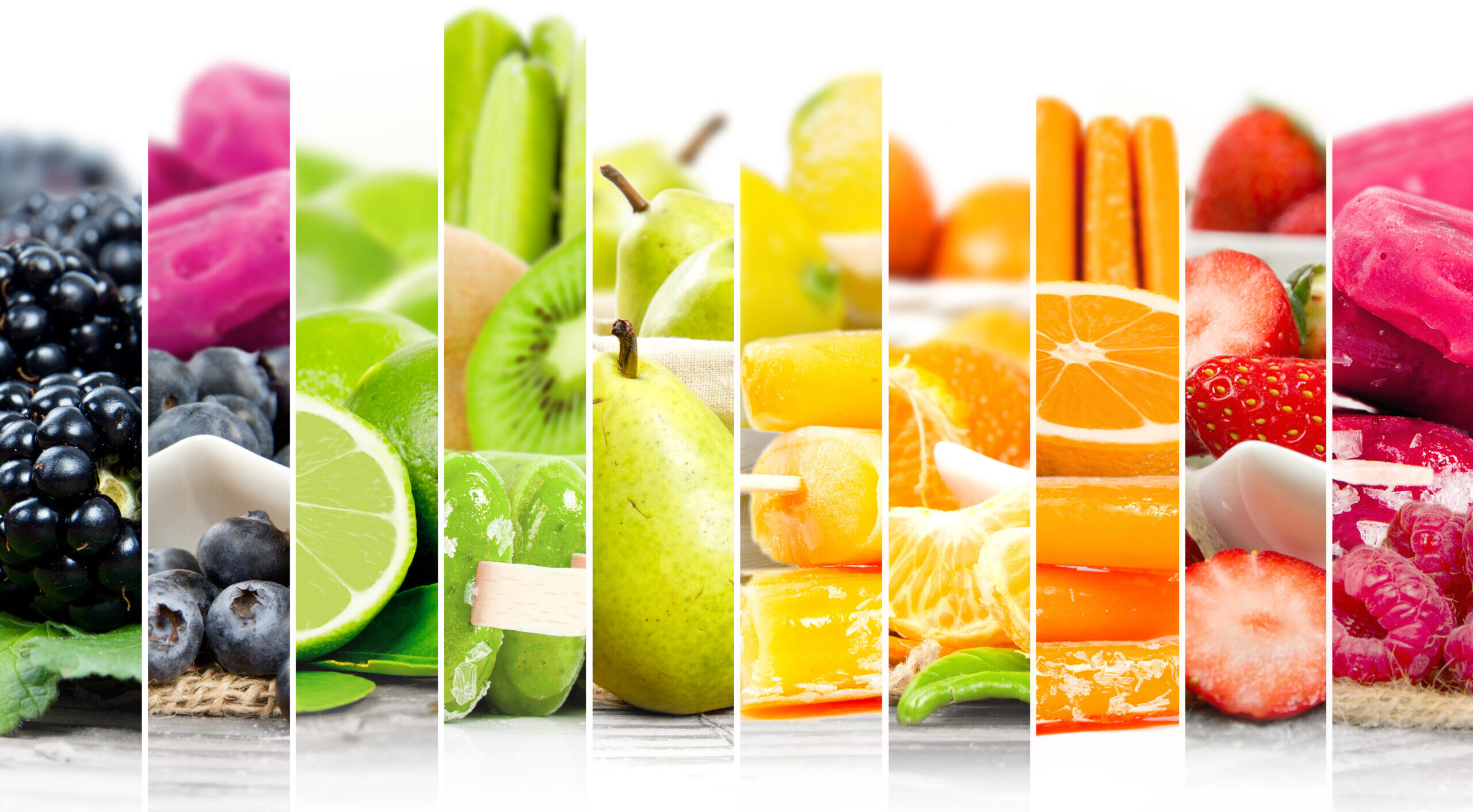
Red– strawberry, cherry, raspberry, watermelon
-
- Red is one of the most appetite-stimulating colors. It signals ripeness, sweetness and energy, making it a dominant choice for berry-flavored supplements and energy products
Yellow/Orange– citrus, mango, peach, pineapple
-
- Warm tones evoke tropical and citrus notes. Orange is strongly associated with vitamin C, making it a natural fit for immune support products.
Green– mint, apple, lime, matcha
-
- Green communicates freshness and health. It’s increasingly used in wellness and clean label formulations to signal natural, plant-based origins
Purple/Blue– grape, blueberry, blackberry, acai
-
- Purple tones are associated with antioxidant-rich fruits and are frequently used in brain health, recovery and premium supplement lines.
How Sensient Can Help You Get it Right
We understand that color and flavor aren’t afterthoughts, they’re core to product performance. Our team works alongside formulators, brand managers and innovation teams to develop integrated color-flavor systems that resonate with today’s consumers.
Here’s how we can support your product innovation:
Natural Color Expertise: Our portfolio includes a wide range of plant-based pigments and natural color systems optimized for stability across diverse formulation environments, including high-pH, heat sensitivity and light-exposed applications.
Color-Flavor Matching: We help you align your color profile with your flavor identity from the start, so the consumer’s first impression matches their taste experience every time.
Custom Innovation Support: Whether you’re launching a new SKU, converting from synthetic to natural or reformulating an existing product, our technical team is equipped to guide your project from concept to commercialization.
Color and Flavor are the first conversation your product has with a consumer. Make sure it’s the right one. Contact Sensient Pharmaceutical today to explore how our color and flavor solutions can elevate your next product innovation.
Let's Get Started!
Requesting a sample from us is easy. We'll get it to you fast and with the support you need.