Home » Insights » Expanding the World’s Leading Natural Color Manufacturing Network
Trends and Insights
Expanding the World’s Leading Natural Color Manufacturing Network
Sensient has been at the forefront of the color industry for decades, staying at the top with innovative technologies, novel sourcing, secure global supply, a finger on the pulse, and most importantly, a customer-first mentality.
As unprecedented demand spikes for natural colors, we are pushing even further to meet our customers’ needs.
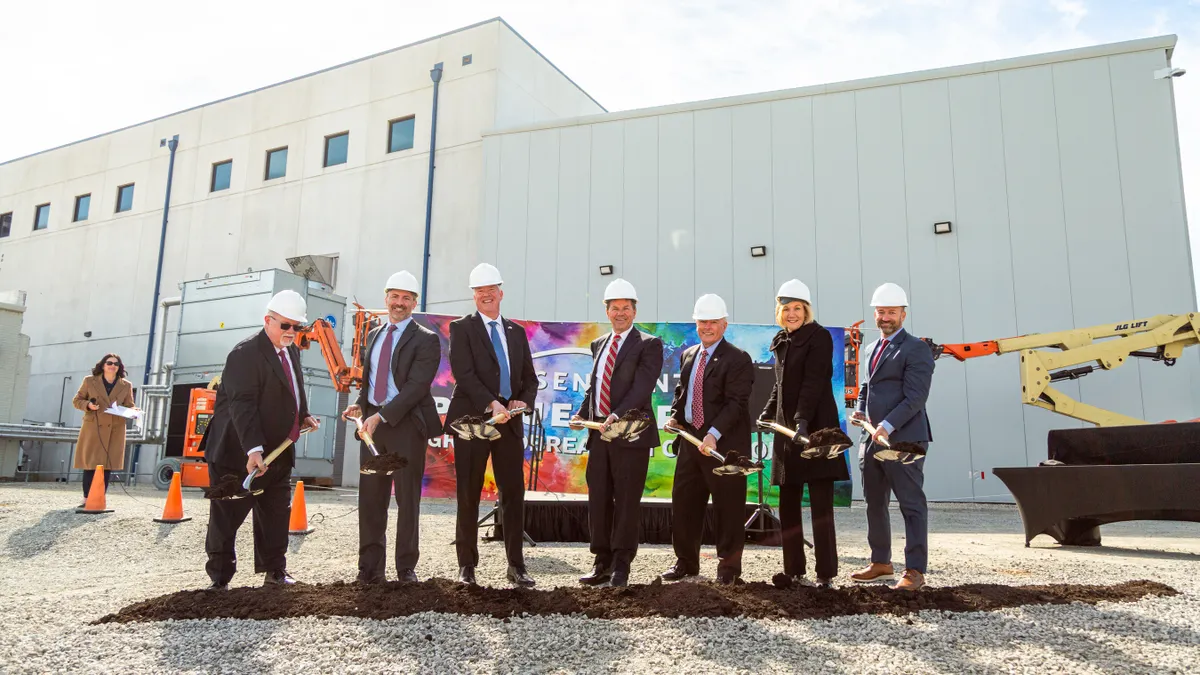
On March 23, 2026, Sensient officially broke ground on a major expansion of the world’s largest color manufacturing plant at our Colors headquarters in St. Louis, Missouri, USA. At the groundbreaking event we celebrated the contributions of many key partners in this expansion, including the employees and leaders without whom this project would not be possible. We also welcomed distinguished guests, including Missouri Lieutenant Governor David Wasinger, and the President and CEO of the Regional Business Council of St. Louis, Karen Branding.
Natural color conversion is transforming the food and beverage industry and the world of color, and Sensient has taken a strong stance in accelerating this movement.
How is Sensient approaching the U.S. conversion from synthetic dyes to natural colors?

Mass market conversion from synthetic dyes to natural colors is the biggest opportunity in the company’s history, but also one of the most logistically challenging. The unprecedented spike in demand places immense pressure on the global botanical supply chain as well as processing capacity. Sensient has been working for several years now to expand our manufacturing capabilities and further extend our relationships with farmers in key growing regions around the world to begin to plant the seeds necessary to provide the volumes demanded in a new naturally colored future.
How would you characterize Sensient’s current capabilities in a global scope?
We have been preparing for the inevitable conversion to natural colors in the US for over 15 years. Beyond growing an expansive agronomy program, we have developed a global supply chain and production network to meet the growing demand. Additionally, we have spent years developing new technologies that have closed the gap between natural and artificial colors and allow our customers to switch to natural colors without having to compromise on the shade performance that US consumers have come to expect from our customers. We continue to invest heavily in the development of next generation of natural color solutions.

What improvements will be made to the St. Louis site?
- This expansion will add almost 29,000 square feet to a facility which is already over 500,000 square feet. The new building will be dedicated to additional natural color processing and expanding manufacturing of useable natural color solutions.
- As demand for synthetic dyes and lakes decreases, certain equipment and areas of the St. Louis plant will transition to adding more natural color production capacity. Sensient will also be updating existing parts of the plant to improve efficiency and pivot to produce in-demand natural color products.
How will local St. Louis operations change? What timeline is expected?
St. Louis operations will be expanding natural color production to meet increased demand from our customers. We will be scaling back on synthetic dye and lake production to match the market and transitioning portions of our facility and select equipment to align with the industry’s changing color needs. The expansion project will add jobs to the St. Louis site, with new roles across every team including production and multiple support roles.
How is the global market shifting in response to regional U.S. conversion to natural colors?

Natural color conversion is transforming the food and beverage industry and the world of color, and Sensient has taken a strong stance in accelerating this movement.
While North America is currently in the spotlight, Europe is already several years into the process of moving to clean label colors. We expect the rest of the Americas, Africa, and Asia Pacific to follow suit in the coming years. Sensient is strengthening our supply chain and stands ready to support our customers around the world whether they are new to naturals or have been working with clean ingredients for some time.
How will other regions be impacted by the U.S. conversion and St. Louis improvements?
National & Global Impact
We expect the massive and relatively sudden increase in natural color interest to have an impact on not only the U.S. market but also the global natural color market as resources are diverted to support U.S. manufacturers and brands importing to the U.S. Bottlenecks can be expected around both botanical supply and processing capacity, and Sensient’s expansion efforts in St. Louis and in other regions are designed to mitigate those challenges.
To support this growth, Sensient is implementing a “network style” global manufacturing model with core facilities across multiple continents, including St. Louis (USA) and sites in Canada, Mexico, Peru, Italy, Germany, and Turkey. This distributed network allows us to select the most efficient and cost-effective production locations for each product, while building redundancy and regional backup capacity to strengthen global supply security.
Beyond investments in those regions, Sensient has also invested in expanding natural color manufacturing technologies and capabilities across its Asia Pacific facilities, including China, India, Australia, and the Philippines, to better support the growing needs of natural color customers throughout the region.
We are working closely with customers around the world to identify their needs for the next several years so we can match our agronomy and production expansion to avoid bottlenecks in supply of natural colors globally.
Where do you anticipate challenges for manufacturing in the next couple of years? How is Sensient’s capital being applied to the other key conversion manufacturing sites?

While a focus for many has fallen on botanical supply, our team’s projections place equal or even in some cases greater significance on the potential bottleneck of processing capacity. Sensient is scaling up manufacturing capabilities across our Central Manufacturing Network with $250 million in investments to increase natural color production capacity. Simultaneously, we are adding and expanding partnerships with farmers around the world to increase botanical growth of key crops to allow us to develop the entire rainbow of colors.
We are systematically building redundancy between our plants by having the same equipment in multiple countries and continents. This will allow us to quickly adjust supply chain or geopolitical challenges, helping us support our customers’ business continuity plans. We also continue to invest in expanding our Research and Development capabilities in key locations in Europe and the United States.

Redundancy between plants and regions extends to our global food safety program, Certasure™. By maintaining a consistent, global standard applied across every batch, we ensure that our products are held to the highest quality and safety guidelines regardless of source. This allows us to offer the Science of Certainty™ to all our customers globally, even as the broader market adjusts to dramatically increased volumes.

Let's Get Started!
We continue to proactively manage our supply chain and our portfolio to anticipate and meet the needs of our customers, and we’re excited for a colorful future for the industry.