Home » Insights » Understanding Colorants in Pharma: Lakes and Dyes
Trends and Insights
Understanding Colorants in Pharma: Lakes and Dyes
What is the difference in lakes and dyes?
Lakes and dyes are used to add color to various products but their applications and properties differ significantly. Let’s take a look at differing characteristics of lakes and dyes and ideal applications for each.
Understanding Lakes
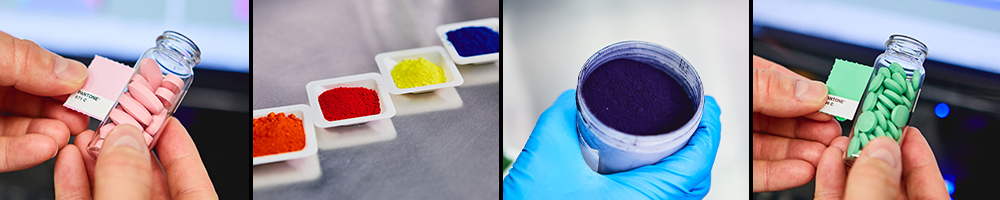
Lakes are pigment-grade colorants produced by precipitating a water-soluble dye onto an insoluble substrate, typically an aluminum or calcium salt. This controlled process converts the dye into a stable, water-insoluble solid that imparts vivid, uniform color. Because lakes resist migration and are less prone to bleeding than soluble dyes, they are widely used across cosmetics, foods, and pharmaceuticals where long-term color integrity is essential. In manufacturing environments, lakes demonstrate exceptional resilience to a range of processing conditions, including variations in pH, heat, and moisture. This stability supports consistent performance during formulation, scale-up, and shelf life, helping maintain targeted shade, opacity, and dispersion. In cosmetics, lakes are commonly used in lipsticks, pressed powders, eyeliners, and nail lacquers to deliver intense pigmentation and reliable payoff without feathering or staining. In foods, they enhance the visual appeal of confections, baked goods, and snack coatings by providing bright, uniform color that holds up under storage and handling. In pharmaceutical products, lakes are frequently selected for tablet coatings, capsules, and chewables, where precise color identification and long-term appearance are important for quality and compliance. Beyond their aesthetic benefits, lakes offer formulators practical advantages: they disperse well in oil- and fat-based systems, minimize color bleed in multi-phase products, and enable precise shade matching across batches. When used within applicable regulatory frameworks and good manufacturing practices, lakes provide a dependable, versatile solution for achieving durable, vibrant coloration in a broad spectrum of consumer and healthcare applications.
Understanding Dyes
Dyes are soluble colorants that produce hue through selective light absorption at the molecular level. In contrast to lake pigments, which are insoluble and dispersed as fine particles, dyes dissolve completely in suitable solvents, enabling even, continuous coloration across substrates. This solubility provides excellent versatility, allowing precise shade control, high chroma, and a smooth, uniform finish in liquid and solid formulations alike. However, the same molecular mobility that facilitates uniform coloring can also make dyes more susceptible to migration, bleeding, and fading, particularly under exposure to moisture, ultraviolet radiation, elevated temperatures, or aggressive chemicals. Across industries—including textiles and apparel, home furnishings, printing and packaging, inks and coatings, plastics, and cosmetics—dyes are selected for their ability to deliver vibrant shades, subtle gradients, and complex patterns. In textile manufacturing, for example, their solubility enables penetration into fibers to create deep, saturated tones and intricate prints. In printing and coatings, dyes can offer clarity and brilliance that are difficult to achieve with particulate pigments.
To address performance challenges, extensive strategies have been developed to enhance dye fastness and stability. Process controls—such as pH management, temperature profiling, and optimized dye-bath composition—improve fixation and shade reproducibility. Chemical approaches include the use of fixatives and mordants that promote covalent or ionic bonding between dye molecules and specific fiber chemistries (e.g., cellulose, protein, or synthetic polymers), thereby reducing wash-off, crocking, and photodegradation. Post-treatment techniques, such as crosslinking, cationization of substrates, and application of protective overcoats or UV absorbers, further mitigate bleeding and fading. Advances in dye chemistry and materials science continue to expand performance boundaries. Modern reactive, disperse, and acid dye classes are engineered for superior affinity to targeted substrates, while metal-complex and solvent-dye technologies improve resistance to light and chemicals in demanding environments. Innovative formulations incorporate stabilizers, antioxidants, and light absorbers to slow photolytic breakdown, and microencapsulation can reduce migration and enhance processing stability. Collectively, these developments enable longer-lasting color intensity, improved environmental profiles through lower effluent loads and higher fixation rates, and more reliable performance across diverse applications.
Applications and Advantages
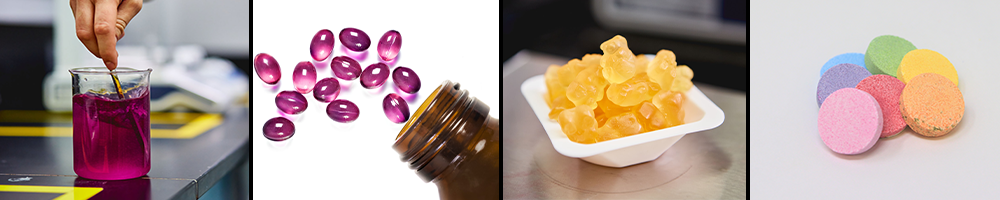
Lakes are preferred for products requiring stable, nonbleeding coloration such as pharmaceutical coatings, compressed tablets, and dry mixed products that are consumed as powder. Their insoluble nature ensures color consistency and longevity, making them ideal for applications where stability is paramount.
Dyes excel in applications where vibrant colors are desired. The solubility of a dye allows for precise color matching and customization. Dyes are particularly good in liquids/ beverages, effervescent tablets, soft and hard gel capsules, gummies, powder sachets, or hard candy type lozenges.
"Color speaks to customers, enhancing their decisions with the power of emotion." Caroline Ingoglia, Senior Application Scientist
Choosing between the two
Several factors come into play when determining whether a lake or dye will work best for your application. The intended application, desired color intensity, stability requirements, and regulatory considerations all influence the selection process.
Regulatory Compliance
Both lakes and dyes are subject to regulatory oversight to ensure their safety for use in consumer products. Regulatory bodies, such as the FDA and EFSA, have guidelines regarding acceptable colorants and their usage levels in various products. Manufacturers must adhere to these regulations to ensure product safety and consumer satisfaction.
Conclusion
While lakes and dyes share the common goal of adding color to products, their compositions, properties, and applications set them apart. Lakes offer stability and consistency, making them ideal for products requiring long- lasting coloration, while dyes provide vibrant hues and versatility for a wide range of applications.
Understanding the differences between lakes and dyes is essential for selecting the correct colorant for specific product requirements, ensuring both aesthetic appeal and regulatory compliance.
Let's Get Started
Requesting a consult with Sensient's excipient experts is easy and our team is glad to assist!