Trends & Insights
Nutraceuticals: Are they Food or Drugs?
Are Nutraceuticals Classified as Food or Drugs by the FDA?
When product formulators and R&D teams select color additives for nutraceuticals, the decision is often driven by stability, cost and aesthetics. What frequently gets overlooked, sometimes with serious consequences, is regulatory fit. Specifically, the fact that the FDA classifies dietary supplements and functional foods as food products, not drugs. That single classification has sweeping implications for which color additives are permissible for your formulation, and it is why the shift to natural colors for nutraceuticals is no longer a branding choice, it’s imperative for compliance.
Why the FDA’s Food Classification Matters for Color Additives
Under the FDA, dietary supplements are regulated as a subcategory of food. This isn’t a technicality; it directly determines which color additives the FDA permits in your product. The agency maintains a rigorous list of approved color additives for food use, and that list does not overlap entirely with what is permitted in drugs or cosmetics.
Color additives used in nutraceuticals must either be from the FDA’s list of certified synthetic dyes approved for food use, or they must qualify as exempt from certifications, which is precisely the category that most natural color sources fall into. Synthetic dyes that are cleared for OTC pharmaceutical applications are not automatically permissible in a dietary supplement. If your formulation uses a colorant outside of the food-approved list, you are not just making a branding misstep, you are potentially out of compliance.
Natural Colors for Nutraceuticals
- Anthocyanins: extracted from sources like elderberry, red cabbage and purple sweet potato, producing rich reds, purples and blues.
- Curcumin: derived from Turmeric, delivering warm golden yellows. Notably curcumin itself carries functional health benefits that can reinforce product claims.
- Spirulina extract: One of the few approved sources of a true blue-green hue in food grade applications.
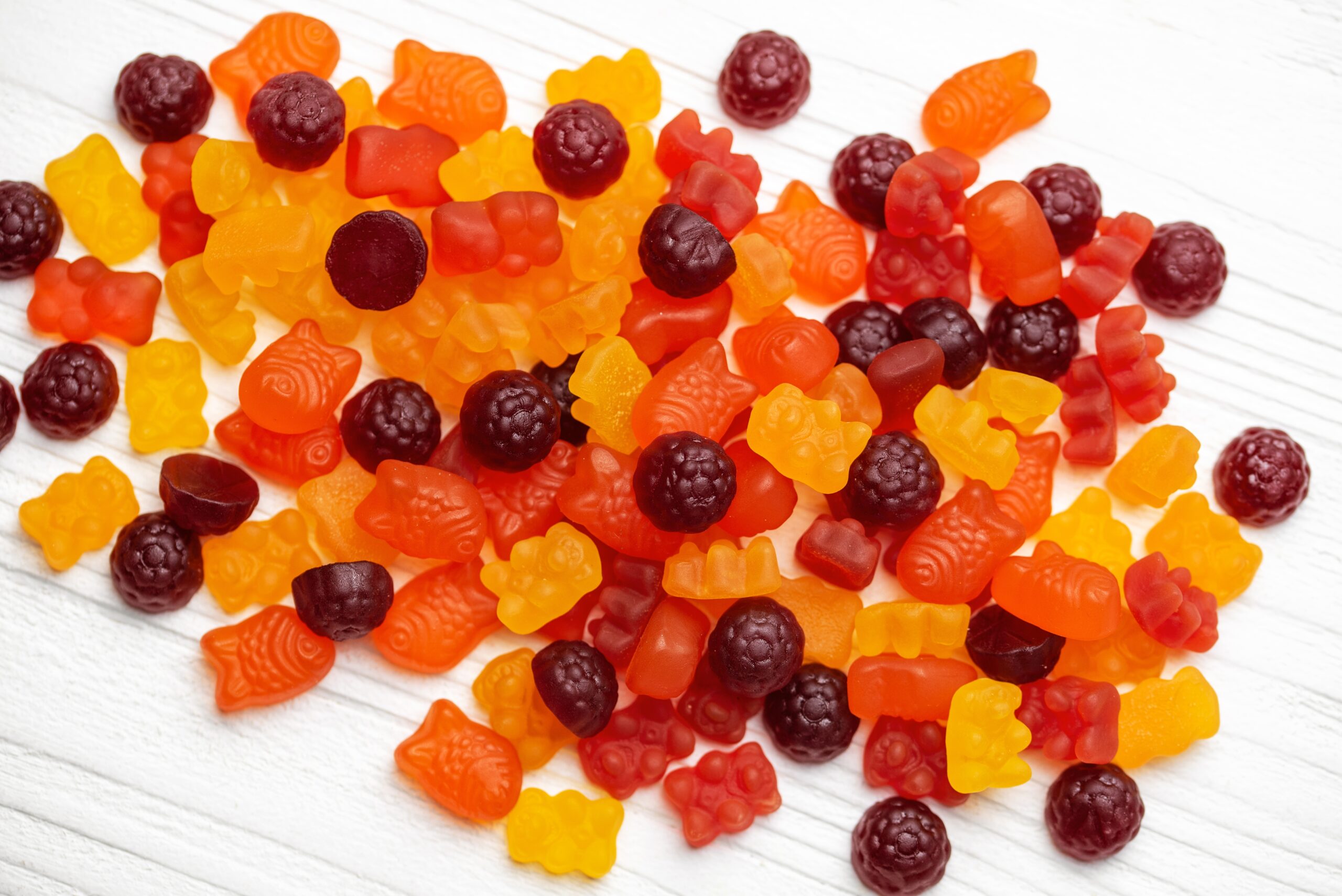
- Beet juice and betanin: for vivid pinks and reds, commonly used in gummy formats.
The formulation challenges with natural colors are real and should not be minimized. They are generally less stable than synthetic colors when exposed to heat, light and pH fluctuations. They can require higher usage levels to achieve equivalent color intensity, and some interact with active ingredients in unpredictable ways. Working closely with color suppliers early in the formulation process, before final product specs are locked, is essential to navigating these challenges successfully.
The Clean Label Signal Cannot be Ignored
Beyond compliance, natural colors for nutraceuticals carry a powerful secondary benefit: they serve as a visible proxy for product quality and brand integrity. Today’s nutraceutical consumer is increasingly ingredient-literate. They scan labels. They google what they don’t recognize. They share opinions in communities and on review platforms.
A label that reads “beet juice color” or “turmeric extract” communicates something meaningful about the brand’s values and the product’s formulation philosophy, before the consumer reads a single health claim. This matters enormously in a category where trust and perceived efficacy are the primary purchase drivers. Formulators who view natural color selection as a purely aesthetic decision are missing its role as a brand signal and a trust building mechanism.
Making the Transition: Framework for R&D Teams
For formulators tasked with transitioning an existing product line or designing a new one, the following approach is recommended:
- Audit your current color additive list against the FDA’s approved color additive regulations to identify any compliance gaps
- Engage your natural color suppliers early – before reformulation begins – to understand stability profiles, compatible matrices and minimum effective use levels for your specific product format
- Conduct accelerated stability testing with natural colors under the expected shelf-life conditions, including temperature, humidity and light exposure
- Update product labeling to clarify communicating the natural color source, maximizing the clean-label benefit with the end consumer
The Botton Line
The FDA’s classification of nutraceuticals as food is not a regulatory footnote, it is a functional fact that should be shaping every one of your color additive decisions if you are a nutraceutical manufacturer. Natural colors for nutraceuticals are not just a response to consumer trends, they are scientifically sound, regulatory aligned, and a commercially strategic choice for brands serious about long-term market viability. The formulation complexity is solvable. The regulatory risk of staying the course of synthetic dyes is not. Now is the time to make the switch.
Let's Get Started!
Requesting a sample from us is easy. We'll get it to you fast and with the support you need.